
World Challenges | Water & Governance
Water built the world’s first civilizations — and destroyed many of them. The Euphrates and Tigris nurtured Mesopotamia. The Nile made Egypt immortal. The Indus gave rise to one of antiquity’s greatest cultures. Today, these same rivers, and hundreds more like them, are becoming something else: weapons.
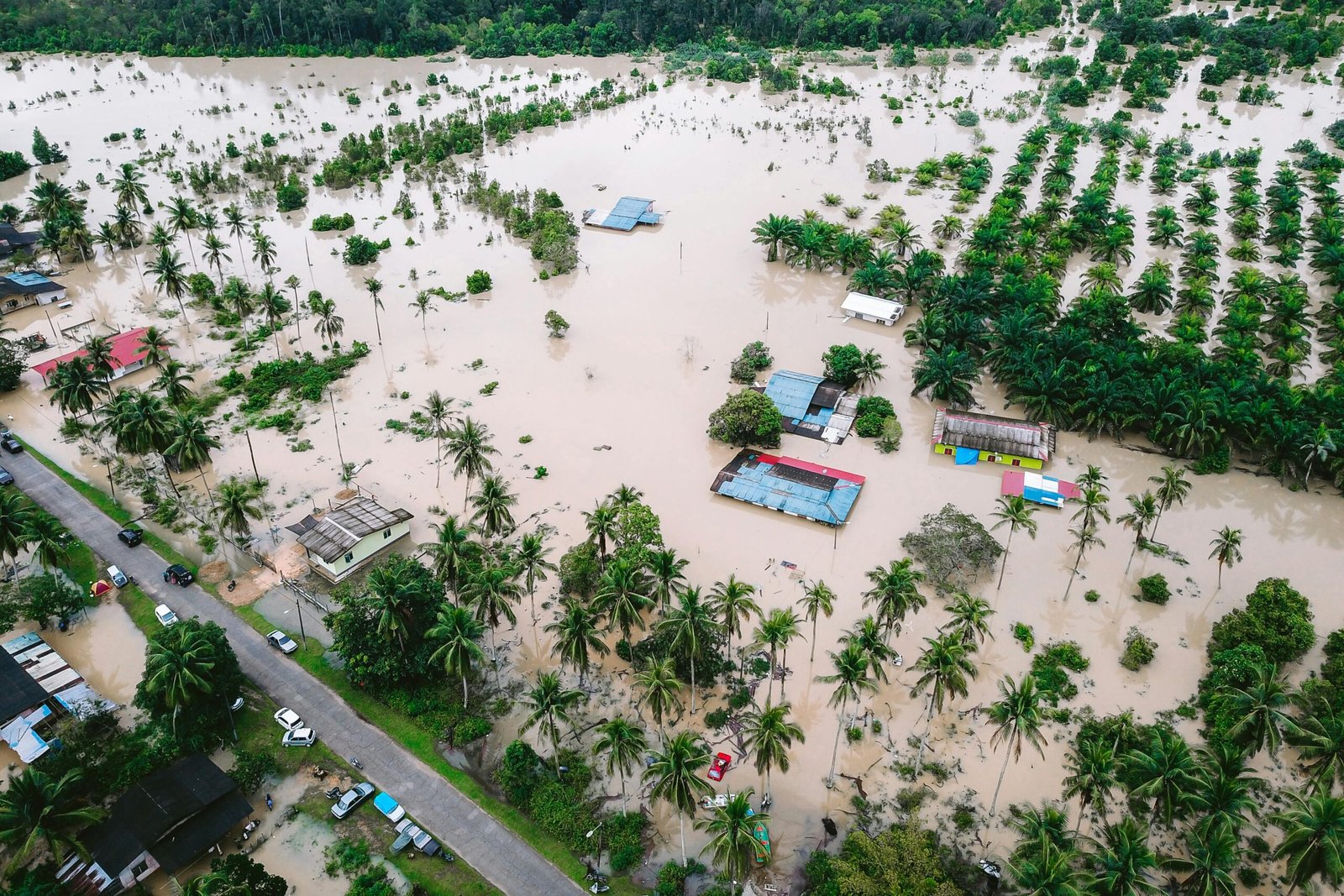
In 2026, the global water crisis has moved from a background warning to a front-page emergency. The United Nations has described this moment as an “Era of Global Water Bankruptcy” — a world where entire regions are spending water reserves built over centuries, drawing down aquifers that will take millennia to refill. Half of humanity already lives under water stress. Rivers that once ran full year-round now run dry for months. While droughts dry up these ancient rivers, other regions are forced to engineer solutions for catastrophic urban flooding. Glaciers that fed the great rivers of South Asia and the Andes are retreating at speed, putting billions of people downstream at risk of losing their most fundamental supply.
But the water crisis is not simply a matter of rain and drought. It is, at its core, a crisis of governance — of who controls the water, who shares it, and who gets left behind when it runs out. And in 2026, that governance crisis is reaching a breaking point.
The Challenge — Rivers That Cross Borders, Agreements That Don’t
Here is a fact that should stop you in your tracks: over half of the world’s 310 international river basins, and all but five transboundary aquifers, lack intergovernmental cooperative agreements. More than half of the planet’s shared rivers have no rules. No framework. No agreed system for deciding who gets how much water, when, and under what conditions.
This governance vacuum is not an abstract policy problem. It has immediate, life-altering consequences for billions of people. Nearly two-thirds of the world’s freshwater crosses national borders, yet key powers including the United States and China have never ratified the 1997 UN Watercourses Convention. Unlike climate, water has no standing global negotiation process with binding targets or enforcement.
The hotspots are multiplying. In the Nile Basin, Ethiopia’s Grand Ethiopian Renaissance Dam — the largest hydroelectric dam in Africa — has reshaped the flow of the world’s longest river, intensifying tensions with Egypt and Sudan that have simmered for decades. Egypt, which depends on the Nile for nearly all of its fresh water, has called the dam an existential threat. Sudan has at times supported the dam, at times opposed it. Negotiations have repeatedly collapsed.
In South Asia, the Indus Waters Treaty — long regarded as one of the world’s most resilient water-sharing agreements, having survived three wars between India and Pakistan — has been suspended in the wake of renewed military tensions over Kashmir. The treaty, brokered by the World Bank in 1960, governed the use of six rivers shared by two nuclear-armed nations. Its suspension has sent shockwaves through the diplomatic community.
In Southeast Asia, China’s construction of massive upstream dams on the Mekong River has dramatically altered flow patterns downstream, affecting the livelihoods of millions of fishermen and farmers in Vietnam, Cambodia, Laos, Thailand, and Myanmar. Scientific assessments warn that up to one-fifth of fish species in the Mekong could face extinction risks under current development trajectories. Fewer fish means fewer fishing jobs, collapsed local economies, and desperate migration.
In the American West, the Colorado River — which supplies water to 40 million people across seven US states and Mexico — is at a breaking point. As a changing climate dries up the Colorado River, the seven basin states cannot agree on how to share the declining water resources. Reservoirs have hit historic lows. The states have been talking for decades, but as one political scientist noted, they seem more interested in hiring lawyers than solving the problem.
The scale of conflict tied to water is startling. The Pacific Institute recorded 420 water-related conflict events in 2024 — an 18% increase over 2023 — spanning Sub-Saharan Africa, South Asia, and Eastern Europe. Most are not dramatic “water wars” in the Hollywood sense. They are local clashes, infrastructure sabotage, political violence, and coercion, where water is the trigger or the leverage. In the Sahel, armed groups exploit competition over water and grazing to recruit followers and control populations where governments are absent. Around Lake Chad, declining water levels and collapsing livelihoods have opened space for violent actors to expand their influence. The deeper danger, as analysts now warn, is not a single dramatic water war — it is a slow, cumulative collapse. The decline of water cooperation is a direct risk to human security, economic stability, ecosystem health, and peace. The danger is not that water is likely to cause conflict — the danger is that we are dismantling the very systems that have prevented conflicts for decades.
The Solutions — When Nations Choose to Share
Here is what the crisis narrative often obscures: water cooperation has an extraordinary track record. For decades, countries that seemed destined to fight over rivers have instead, quietly and persistently, chosen to share them. The lesson of history is not that water inevitably causes war — it is that water can be one of the most powerful catalysts for peace and cooperation humanity has ever found.
A dense governance network of more than 800 treaties, 120 basin organizations, and 110 less formal institutional structures has emerged over generations, generating multiple benefits ranging from flood protection to food security for people, ecosystems, and countries.
The Danube River is one of the great success stories. Flowing through 19 countries — more than any other river in the world — the Danube was once one of Europe’s most polluted waterways and a source of significant political tension. Today, it is governed by the International Commission for the Protection of the Danube River, which has brought together governments from Western Europe to the Black Sea. Shared management of the Danube has led to sustainable transportation and improved water quality along the river and in the Black Sea.
In West Africa, the Senegal River Basin Organization has become a model for the developing world. Covering Guinea, Mali, Mauritania, and Senegal, the organization has facilitated shared hydropower projects that generate electricity and income for all member states. Twenty years of World Bank engagement with the Senegal River Basin Organization facilitated the integration of Guinea — home to the river’s headwaters — information-sharing, a master plan, and a cost-sharing formula. Countries that might have competed over the river’s resources instead built shared infrastructure and shared prosperity.
The Mekong River Commission, despite the enormous pressures placed on it by upstream dam development, continues to function as a critical platform for data sharing, ecological monitoring, and diplomatic dialogue among the five lower Mekong nations. Its Strategic Plan for 2026–2030, developed with support from international partners, includes a Joint Environmental Monitoring Programme that tracks ecological health at major hydropower stations and builds the evidence base for future negotiations.
In Southern Africa, Mozambique — a country where 54% of water resources originate upstream in other countries — has pursued a determined strategy of bilateral river agreements with Zimbabwe, South Africa, Eswatini, and other neighbors. Rather than accepting vulnerability, Mozambique has made water diplomacy a cornerstone of its development strategy, recognizing that cooperation is the only path to water security for a downstream nation.
Crucially, the UN Water Convention — the global legal framework for transboundary water cooperation — is growing. Since the Convention’s global opening in 2016, countries including Chad, Senegal, Ghana, Guinea-Bissau, Togo, Cameroon, Iraq, Nigeria, The Gambia, Namibia, Panama, Côte d’Ivoire, Zimbabwe, Zambia, Bangladesh, Sierra Leone, Botswana, and Jordan have acceded, with more countries in the process of joining. Each new member represents a political commitment to cooperation over conflict.
Innovation — New Tools for Ancient Problems
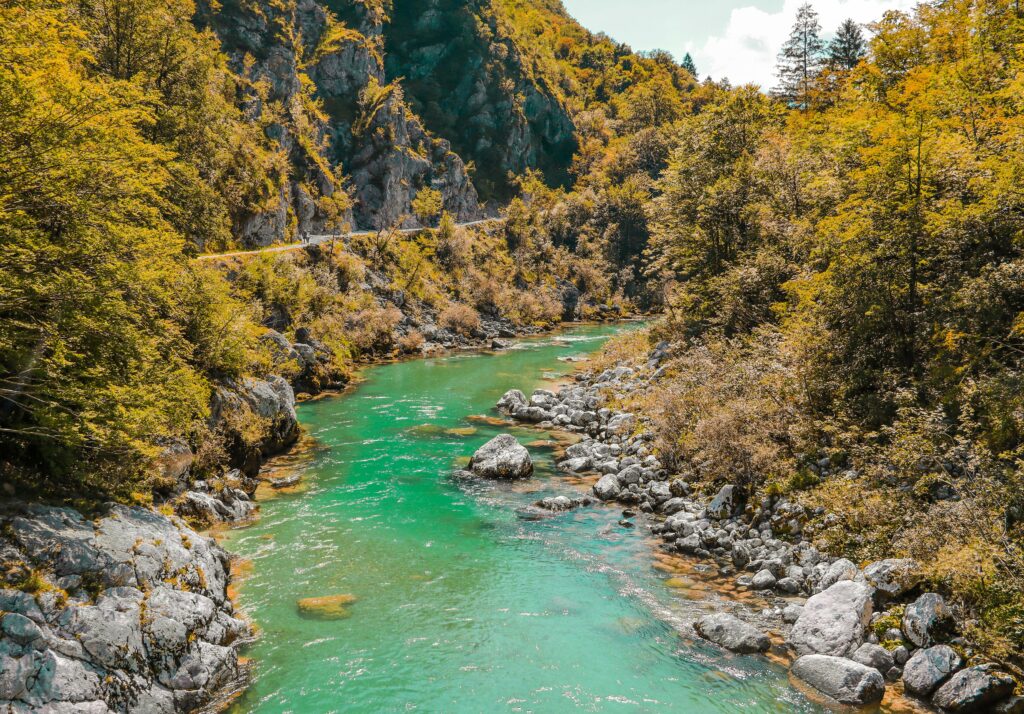
The next generation of water governance is not being built only by diplomats in negotiating rooms. It is being built by scientists, engineers, data analysts, and community organizers who are bringing entirely new tools to bear on one of humanity’s oldest challenges.
Satellite Data and Hydrological Transparency

One of the deepest roots of transboundary water conflict is mistrust — specifically, the inability of downstream countries to verify what upstream countries are doing with shared rivers. Satellite technology is changing this. Earth observation tools can now monitor river flows, reservoir levels, dam operations, and groundwater depletion from space, providing independent, verifiable data that all parties in a basin can access. This kind of hydrological transparency removes one of the key pretexts for non-cooperation: the claim that you cannot trust what the other side is telling you.
AI-Powered Basin Management
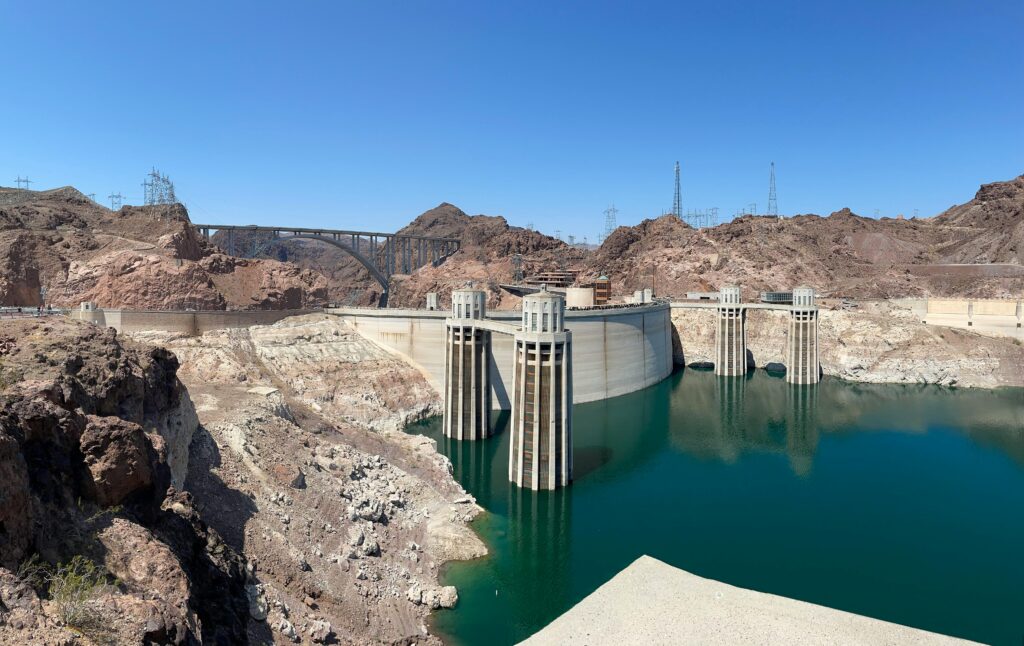
Artificial intelligence is beginning to transform water resource management. AI systems can analyze decades of hydrological data to predict seasonal flows, identify drought and flood risks months in advance, and model the downstream impacts of upstream decisions. The World Bank and Australia’s Murray-Darling Basin Authority, which entered a formal partnership in September 2025, are looking at using AI and earth observation tools to address data gaps, especially in under-monitored regions. When every country in a basin can access the same AI-generated forecasts, it becomes much harder to justify unilateral actions that harm neighbors.
Benefit-Sharing Frameworks

Traditional water agreements focused on dividing water — a zero-sum game that guaranteed winners and losers. A new generation of frameworks focuses instead on sharing the benefits that water generates: electricity, agricultural productivity, flood protection, fisheries, tourism, and ecosystem services. When countries downstream can benefit from an upstream dam’s hydropower generation, and when countries upstream can benefit from downstream fisheries and wetland services, the incentive structure shifts from competition to collaboration. Dam operations and water-sharing must consider impacts on downstream employment, with a share of electricity revenues used to finance wage assistance for fishers, retraining for farmers, and investments in alternative rural enterprises.
Climate-Adaptive Water Agreements
One of the fundamental weaknesses of most existing water treaties is that they were written for a climate that no longer exists. Fixed allocations negotiated in the 20th century do not account for the unpredictable variability of a warming world. A new generation of “climate-adaptive” water agreements is being developed that build in flexibility — mechanisms that automatically adjust allocations based on real-time hydrological conditions, trigger emergency protocols during droughts, and provide for regular renegotiation as climate conditions evolve. These agreements treat water governance not as a static document but as a living process.
Community-Level Water Governance
Some of the most effective water-sharing solutions are happening not between nations but between communities. In India, ancient systems of community water governance — tank systems, stepwells, and watershed management councils — are being revived and adapted for the 21st century. In the Middle East, the Good Water Neighbors project has brought together Israeli, Palestinian, and Jordanian communities to work on shared water problems at the local level, building trust and practical cooperation even when high-level political negotiations are stalled.
Desalination and Water Recycling
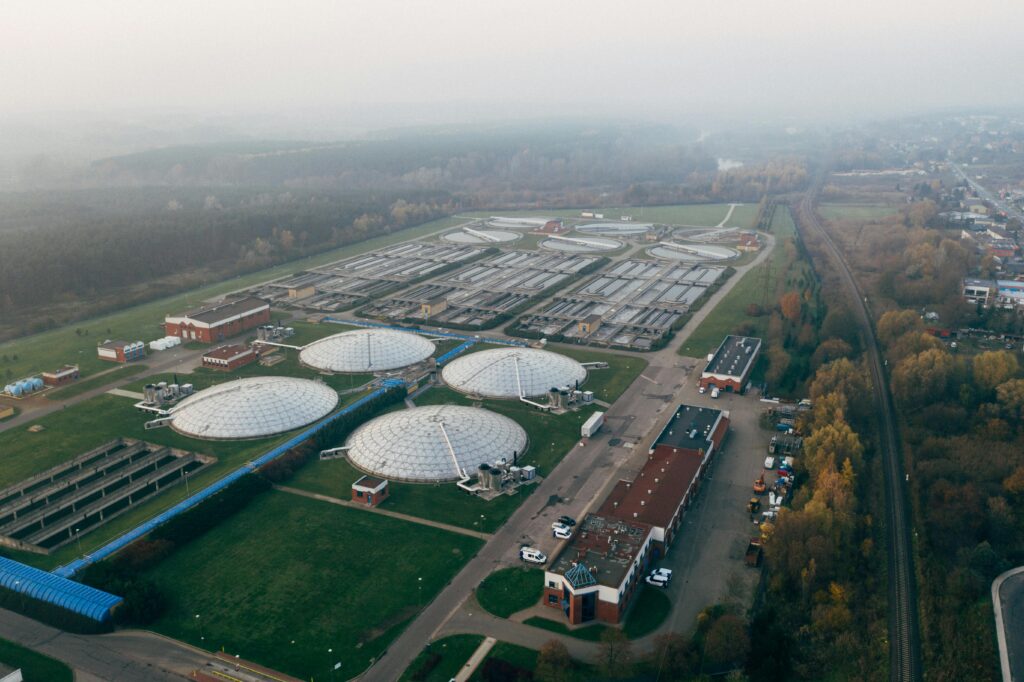
For coastal nations and water-stressed regions, investment in desalination and advanced water recycling is reducing dependence on shared river systems and lowering the stakes of transboundary disputes. Israel, one of the world’s most water-stressed nations, now recycles approximately 90% of its wastewater for agricultural use and meets a significant portion of its freshwater needs through desalination. This technological self-sufficiency has reduced Israel’s dependence on shared regional water sources and, paradoxically, has created more room for regional water cooperation.
Human Stories — The Diplomats and the Farmers
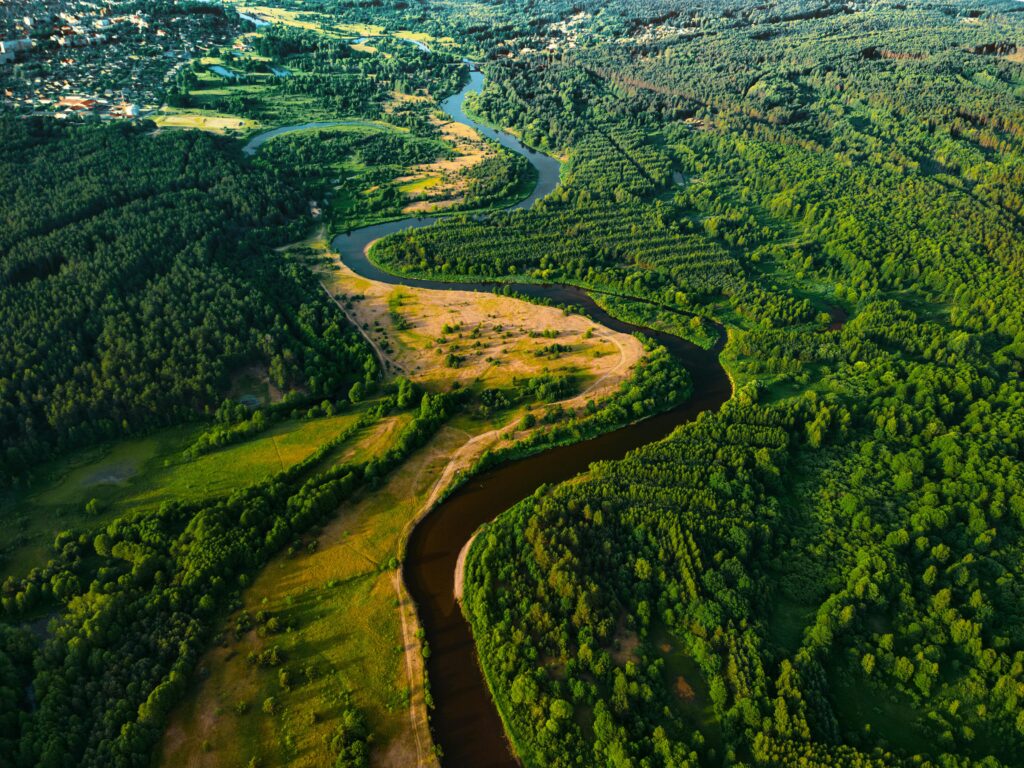
The story of water governance is ultimately a human story, told not in treaty texts but in the lives of the people who depend on rivers.
In Vietnam, Deputy Prime Minister Hong Ha has described how 60% of his country’s water flows in from transboundary rivers. Vietnam sits at the end of the Mekong, the most downstream of all the river’s major countries. Every dam built upstream in China or Laos changes the water that reaches Vietnamese farmers and fishermen. Vietnam has been one of the most persistent advocates for regional water cooperation, pushing for transparent data sharing and meaningful joint management in a basin where the power imbalance between upstream and downstream nations is enormous.
In the Sahel, communities around Lake Chad have watched the lake shrink to a fraction of its former size over the past half century. What was once the world’s sixth-largest freshwater lake has lost roughly 90% of its surface area, turning fertile land to desert and pushing millions of people into poverty and displacement. But the Lake Chad Basin Commission, comprising Nigeria, Niger, Chad, Cameroon, and the Central African Republic, has refused to give up. Working with international partners, the commission is developing restoration plans, managing what remains of the lake’s resources cooperatively, and finding ways to sustain the livelihoods of the 50 million people who depend on it.
In the American Southwest, Indigenous communities are achieving landmark victories in water rights that had been denied to them for generations. The Northeastern Arizona Indian Water Rights Settlement Agreement of 2024–2025 is a historic win for tribal communities whose rights to Colorado River water date back centuries. These settlements are not only matters of justice — they are reshaping the governance of one of the world’s most contested river basins and forcing all stakeholders to reckon with the full picture of who depends on shared water.
In Bangladesh, women in rural communities are often the first to walk miles for water during droughts and the first to lose their livelihoods when floods contaminate wells. Community-based water management programs in Bangladesh are now deliberately including women in decision-making processes, recognizing that the people who bear the greatest burden of water insecurity must also have the greatest voice in solving it. The results — better-maintained village ponds, more equitable distribution during dry seasons, stronger early-warning networks —demonstrate that inclusive governance is not just a moral principle but a practical advantage.
The Hope — 2026 as a Turning Point

There is reason for genuine hope in 2026, and it comes from a convergence of political momentum, technological capability, and growing recognition that water cooperation is not a luxury but a strategic necessity.
The December 2026 UN Water Conference — only the third such conference in half a century — is being positioned as a watershed moment for global water governance. The rise of a prominent Blue Davos, alongside preparations for the UN Water Conference, reflects a broader moment: converging shocks — from climate volatility and geopolitical fragmentation to energy transition and AI-driven demand — are turning 2026 into a defining year for fresh water. The conference is expected to produce new commitments on transboundary cooperation, finance for water-stressed developing nations, and frameworks for integrating water security into climate adaptation strategies.
The economic case for cooperation has never been clearer. The World Bank has mobilized more than $25 billion in investments for transboundary water initiatives over the past 20 years alone. The return on that investment — in avoided conflict, sustained agriculture, protected fisheries, and stable communities — is many times that figure. Every dollar invested in water cooperation infrastructure generates returns in regional stability, food security, and avoided humanitarian crises that cannot be easily quantified but are unmistakably real.
Perhaps most powerfully, the new generation of water technology is making cooperation easier and more attractive than ever before. When satellite data removes the excuse of ignorance, when AI forecasting removes the excuse of uncertainty, when benefit-sharing frameworks transform rivers from sources of competition into sources of shared prosperity — the arguments for unilateralism become harder to sustain.
Based on the Water Convention, 100 or more agreements have made the availability of water more predictable, led to fewer losses from floods and droughts, and supported the agriculture and energy sectors — enhancing livelihoods and reducing poverty in communities in river basins and beyond.
The work is not finished. Far from it. Dozens of basins remain ungoverned. Ancient grievances still simmer. Climate change is making every negotiation harder by making the resource itself less predictable. But the direction of travel — slowly, unevenly, imperfectly — is toward more cooperation, not less.
Conclusion: The River Has No Passport
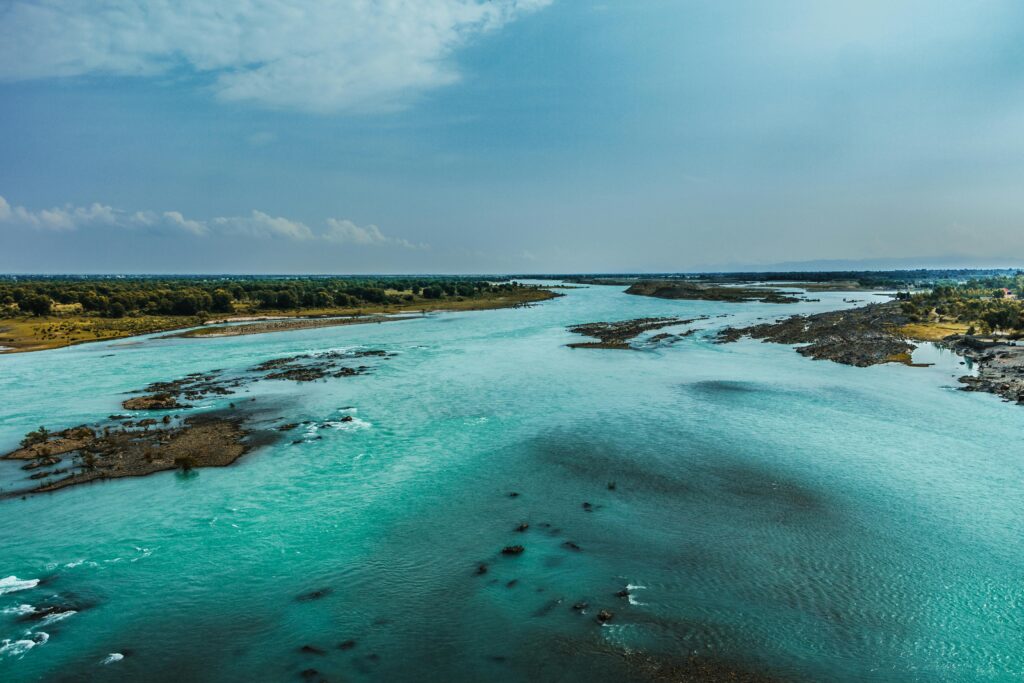
A river does not know which country it is passing through. It does not care about borders drawn on maps or treaties signed in distant capitals. It flows where gravity and geography take it, indifferent to the nations it sustains or the conflicts it ignites.
That indifference is, in a way, water’s great gift to humanity. It forces neighbors to talk. It makes cooperation not a choice but an inevitability — because the alternative, ultimately, is that everyone loses.
The countries and communities that understand this in 2026 — the ones building joint monitoring systems, negotiating adaptive agreements, investing in shared infrastructure, and bringing women and farmers and Indigenous communities to the table — are not just managing a resource. They are building the foundations of a more peaceful world.
Water has always determined whether civilizations thrive or fail. The question for this generation is whether we have the wisdom to share it — before we run out of time, and run out of water, to make the choice.
This article is part of the World Challenges series, exploring the most pressing global challenges of our time and the solutions being built to meet them. Next in the series: Biodiversity Collapse vs. Rewilding Movements.
Sources & Further Reading:
- Circle of Blue: Water, Power, and the Future of Conflict (February 2026)
- Circle of Blue: Water Cooperation is Under Threat (January 2026)
- World Bank: Water Knows No Borders — Transboundary Cooperation (2024)
- UNECE: The Water Convention and Protocol on Water and Health (2026)
- Deccan Herald: When Water Wars Shape Livelihoods (March 2026)
- ScienceDirect: Transboundary Water Cooperation in South Asia (2025)
- fundsforNGOs: Rivers for Generations — Strengthening River Basin Partnerships (April 2026)
- Transboundary Water Cooperation Coalition Joint Statement (2025)
- The American Prospect: The Wild Wild Western Water Wars (April 2026)

2 thoughts on “Why “Water Wars” Might Never Happen: The New Era of Shared Rivers”