
World Challenges – Climate & Environment
The Storm Is Already Here
The floods came without warning to Copenhagen in July 2011. In just two hours, a once-in-a-millennium storm dumped so much rain on the Danish capital that streets turned into rivers, basements filled with sewage, and the city suffered nearly $2 billion in damages. It was a catastrophe — but it was also a turning point. Rather than simply repairing the damage and hoping for the best, Copenhagen did something remarkable: it decided to redesign itself.
Today, that same city is regarded as one of the world’s leading “sponge cities” — urban areas deliberately engineered to absorb, store, and slowly release floodwater, working with nature rather than fighting against it. What happened in Copenhagen is now happening, in different forms, in cities from Shanghai to Philadelphia, from Jakarta to Singapore. A global revolution in urban design is quietly underway, and it could not be more urgent.
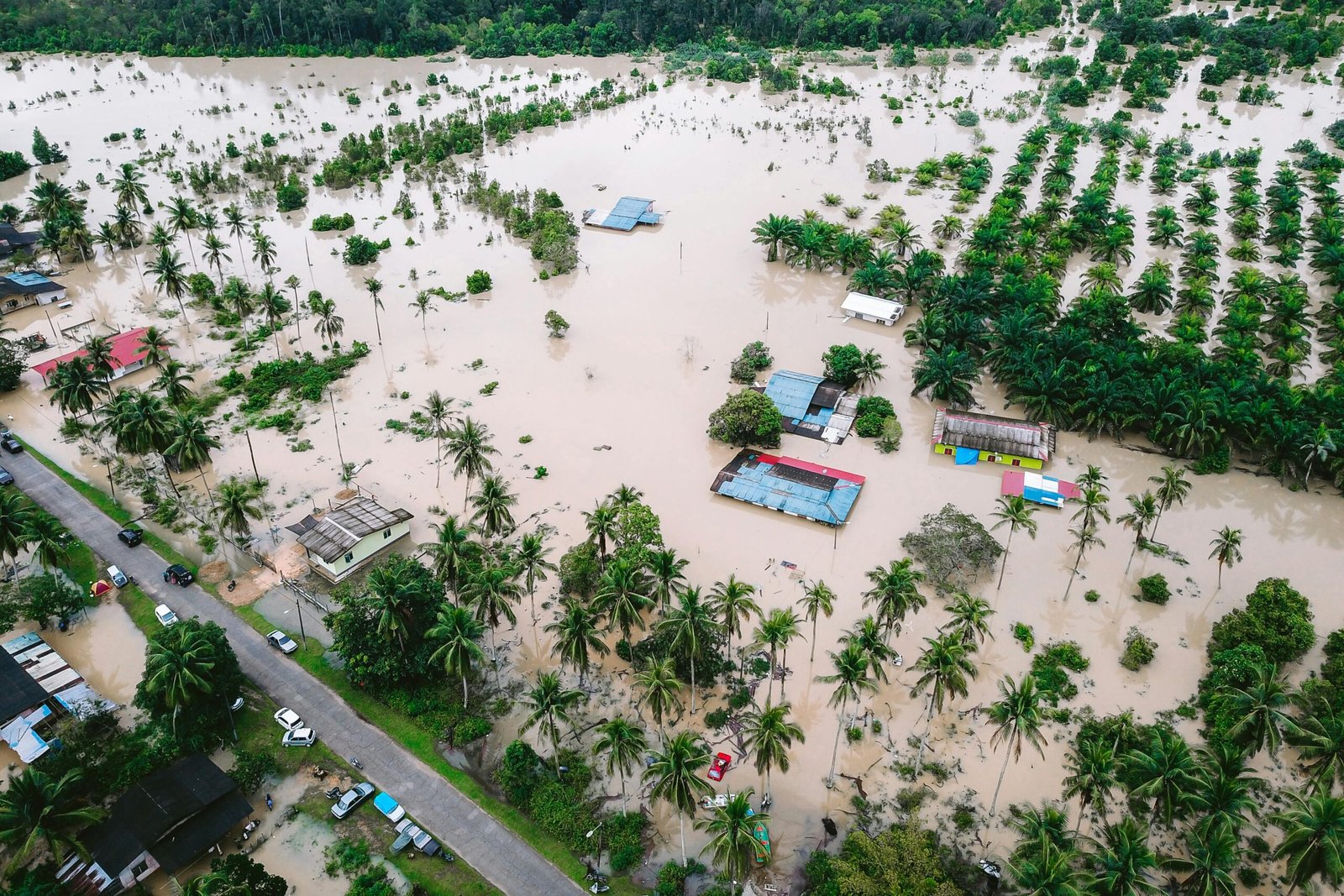
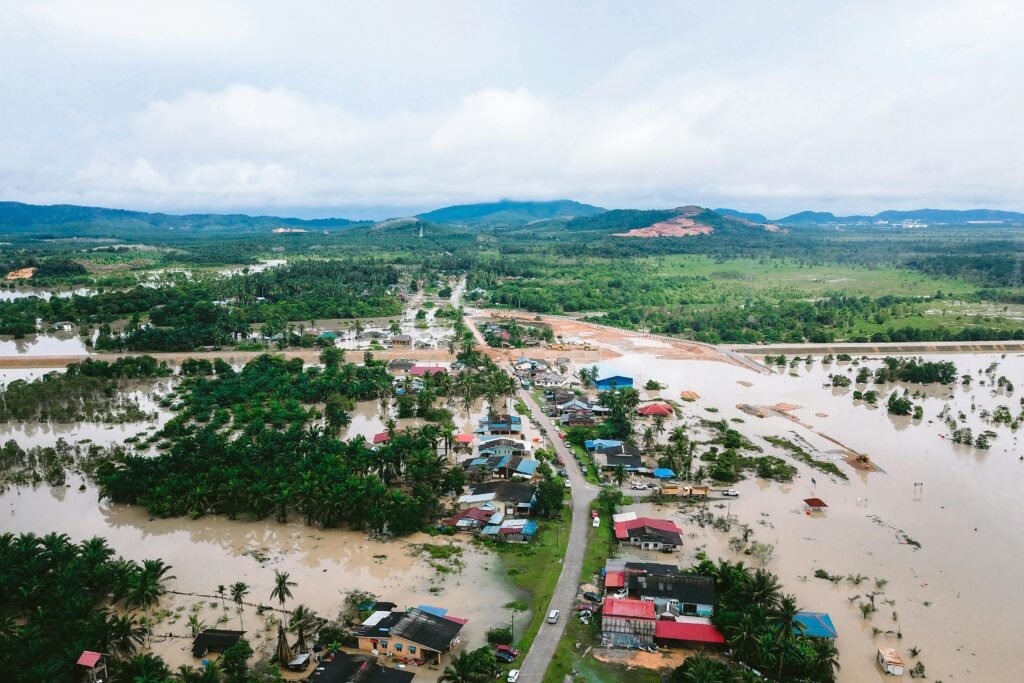
Extreme weather is no longer a distant threat. It is the defining reality of life in cities today. Heatwaves are growing longer and more lethal. Floods are arriving in places that have never flooded before. Coastal cities are watching the ocean inch closer every year. In 2025 alone, the United States experienced a billion-dollar weather disaster every single ten days — a nearly seven-fold increase compared to the 1980s. Around the world, up to 44% of all disaster events are linked to flooding. And the science is unambiguous: without serious adaptation, things will only get worse.
But here is what the headlines often miss. All over the world, cities are responding. Engineers, architects, urban planners, community leaders, and ordinary citizens are building a new kind of city — one that bends rather than breaks, one that absorbs rather than floods, one that cools rather than bakes. This is the story of that transformation, and of the human ingenuity driving it.
The Challenge — Why Cities Are On the Front Lines
To understand why cities are so vulnerable, you have to understand what concrete does to rain.
When rain falls on a forest, it is absorbed slowly into the soil, filtered through roots and earth, and released gradually into rivers. When rain falls on a city — on asphalt roads, concrete sidewalks, steel rooftops, and tarmac car parks — it has nowhere to go. It rushes across impermeable surfaces, overwhelms drainage pipes designed for a gentler era, and causes the kind of devastating flash floods that increasingly paralyze major cities worldwide.
This problem is made dramatically worse by the urban heat island effect. Cities absorb heat during the day and radiate it at night, making urban areas significantly hotter than the surrounding countryside. This trapped heat intensifies rainfall events, accelerates evaporation during droughts, and turns heatwaves into genuine killers. Prolonged exposure to extreme heat increases illness and mortality, particularly among the elderly, young children, and outdoor workers.
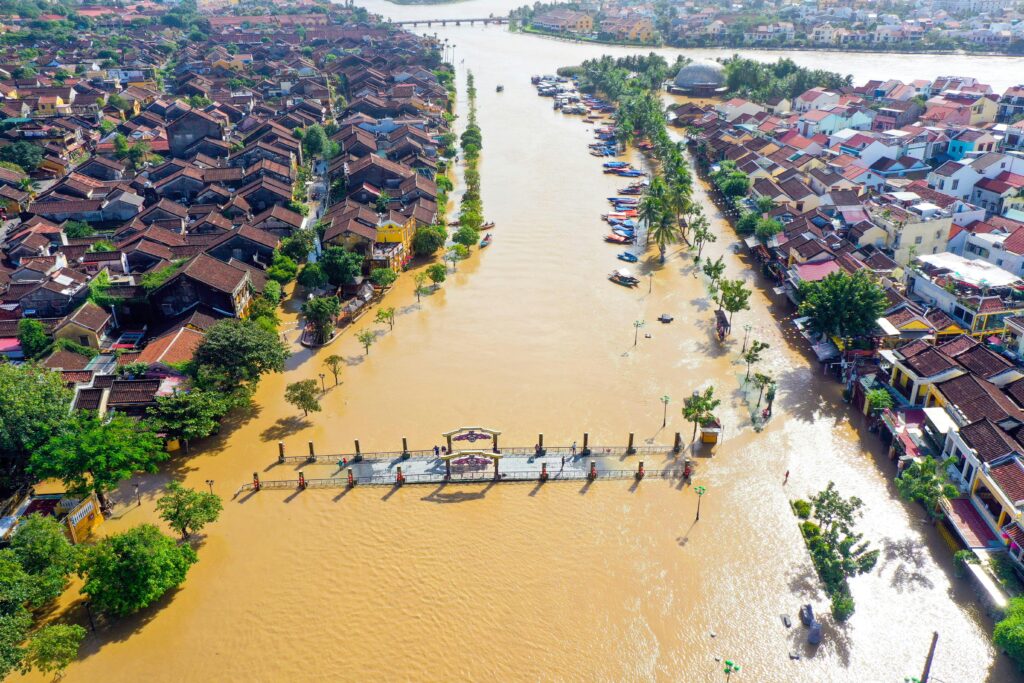
The numbers are sobering. By 2050, more than 800 million people living in 570 cities around the world could be at risk from rising sea levels. The number of cities exposed to extreme weather events is projected to triple by 2050. Climate change is also pushing an additional 189 million people toward hunger as farmlands bake and flood, and at a 4°C temperature rise, that number surges to 1.8 billion more people facing food insecurity.
For cities in the Global South — in South and Southeast Asia, Sub-Saharan Africa, and Central America — the challenge is especially acute. These cities are growing fastest, often expanding into flood-prone and heat-vulnerable areas, with informal settlements built from materials that cannot withstand extreme weather. And they typically have the fewest financial resources to adapt. Meanwhile, in the Global North, cities face a different but equally serious problem: aging infrastructure built for a 20th-century climate that no longer exists.
The Solutions — A New Urban Blueprint
The good news — and it is genuinely good news — is that a new generation of urban design is meeting this crisis with creativity, ambition, and measurable results. Several interconnected approaches are emerging as the most powerful tools in the adaptation toolkit.
The Sponge City Revolution
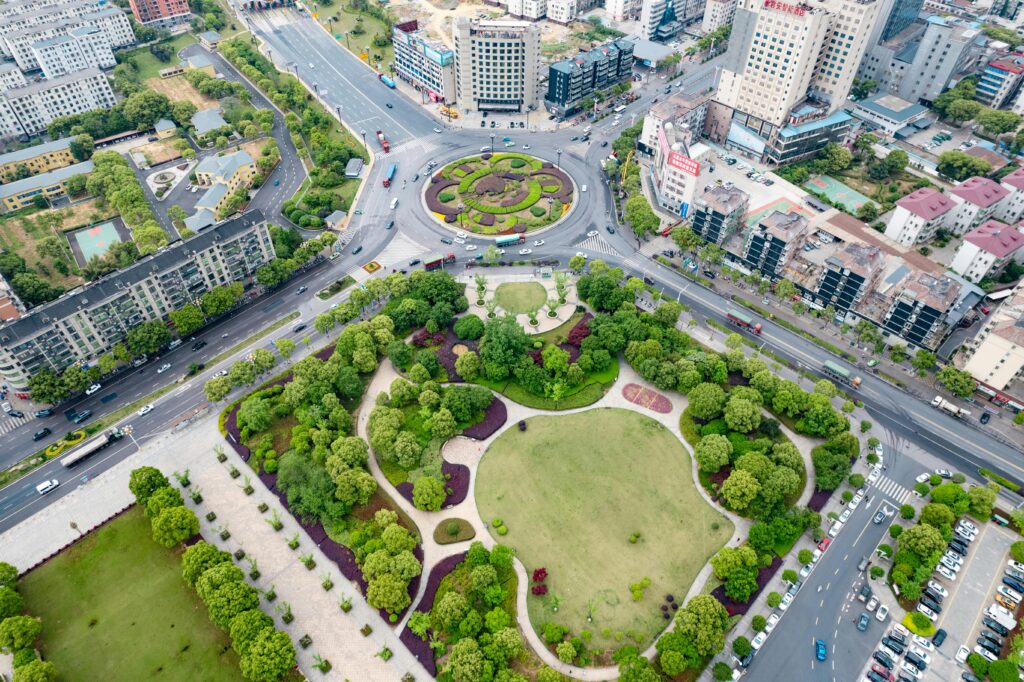
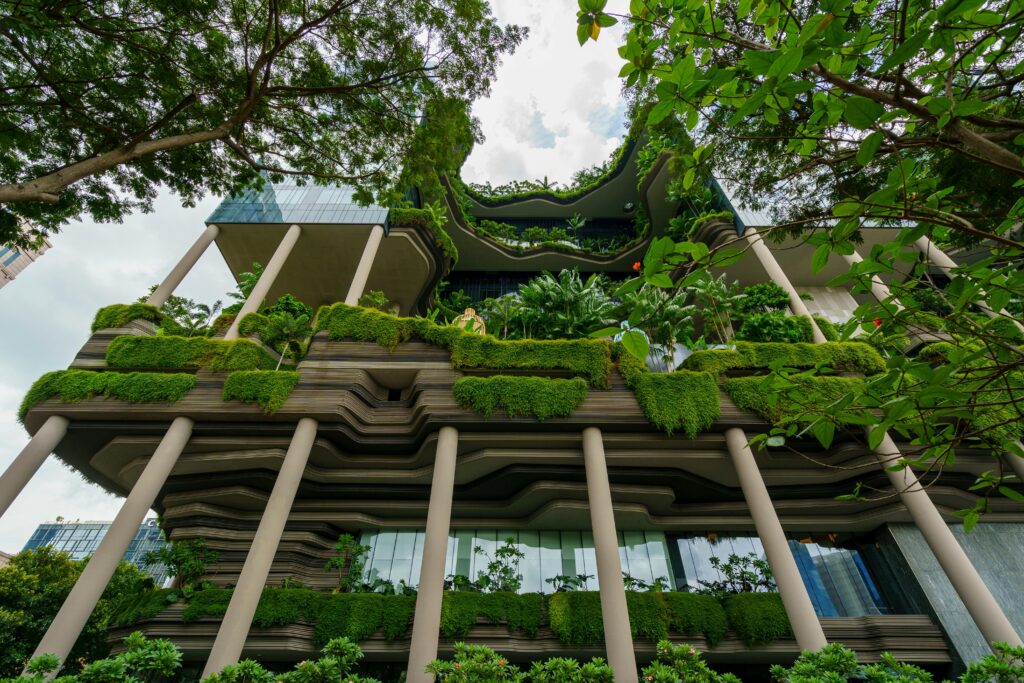
The concept of the “sponge city” is elegantly simple: instead of rushing water off hard surfaces into overwhelmed drains, design the city to absorb it. Parks, wetlands, green roofs, permeable pavements, rain gardens, bioswales, and restored waterways all act as natural sponges, slowing the flow of rainwater, allowing it to sink into the earth, filter naturally, and be released gradually.
Copenhagen is the world’s most celebrated example. After the catastrophic 2011 floods, the city developed an ambitious climate adaptation plan that redesigned entire neighborhoods. Underground, the city built 18 kilometers of tunnels — each three meters wide — that can redirect excess rainwater from parks and streets directly to the harbor at a rate of up to 20,000 liters per second. These tunnels also serve as water storage during dry periods, turning a flood-management system into a water conservation system at the same time.
China has taken the concept to a national scale. Inspired by landscape architect Kongjian Yu and drawing on ancient Chinese irrigation wisdom, the Chinese government has committed to building 30 sponge cities by 2030, with the ambitious target of capturing and reusing 70% of urban rainfall. Cities from Wuhan to Sanya are being transformed with wetland parks, restored riverbanks, and permeable infrastructure. After devastating 2021 floods in Zhengzhou exposed the limits of purely grey infrastructure, the city has since pioneered a new “Blue-Green-Grey” integrated approach that combines natural and engineered solutions.
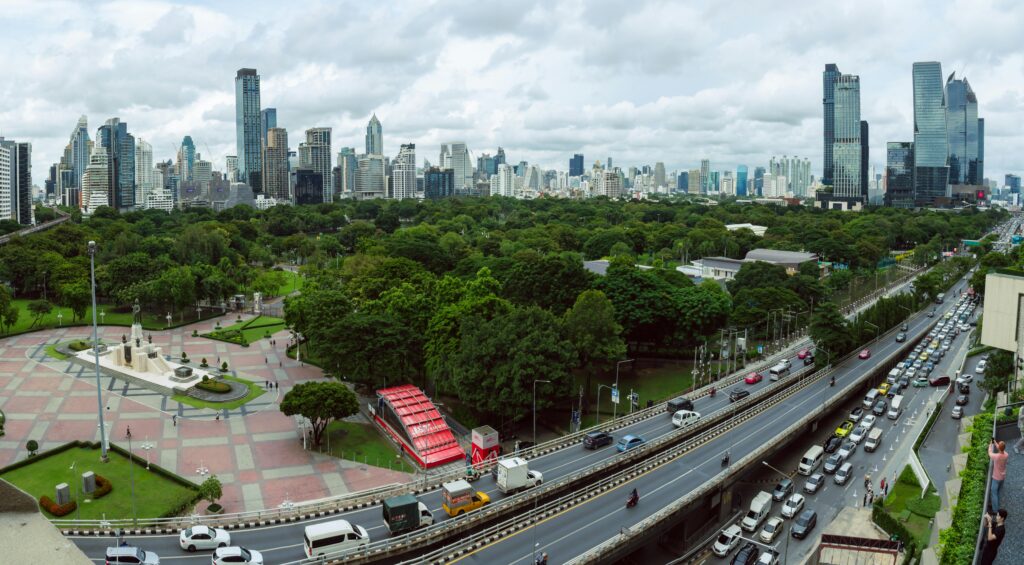
In Southeast Asia, Bangkok has opened the Benjakitti Forest Park, a vast urban wetland in the heart of the city that serves as both a recreational space and a flood buffer. In Indonesia, women-led community groups on vulnerable islands are planting mangrove forests in response to rising seas and worsening tidal floods. In the Philippines, local leaders are building 100-metre-wide “coastal greenbelts” — strips of mangroves, beach forest, and wetland vegetation — to protect shoreline communities from typhoons and storm surges.
Across North America, cities are adapting the concept to their own conditions. Seattle’s South Thornton Natural Drainage System uses rain gardens and permeable pavements to manage stormwater and improve water quality. Philadelphia’s Green City, Clean Waters program is rolling out green infrastructure across the city, including green roofs and rain gardens. New York City is incorporating bioswales — shallow landscaped channels that filter and absorb runoff — into its stormwater management strategy in its most flood-prone neighborhoods.
Nature-Based Solutions: The Cheapest Infrastructure Humanity Has
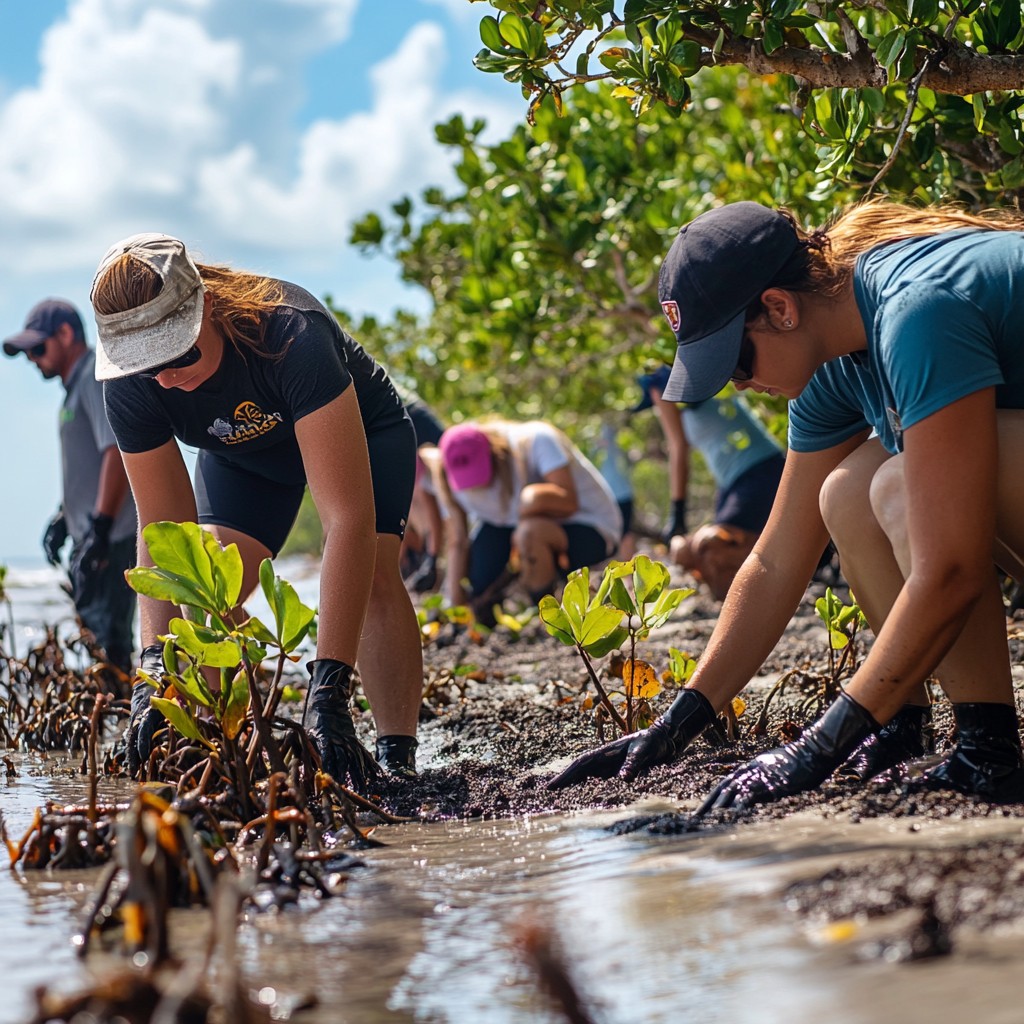
One of the most powerful findings driving the adaptation revolution is a simple economic one: nature is more cost-effective than concrete. Research shows that nature-based solutions — restoring wetlands, planting urban forests, rebuilding mangroves, creating rain gardens — frequently achieve adaptation goals at a fraction of the cost of traditional engineering. Crucially, they also deliver multiple benefits simultaneously: flood protection, carbon capture, biodiversity, air purification, and urban cooling all at once.
The World Bank has calculated that every dollar invested in resilient infrastructure saves low- and middle-income countries four dollars in avoided damages. Studies suggest that complementing infrastructure projects with nature-based solutions could save up to $248 billion annually worldwide. For coastal protection, the case for mangroves, tidal marshes, and seagrasses is overwhelming — they provide natural buffers against storm surges and flooding while also acting as marine habitats and water filtration systems.
Coastal wetland restoration is accelerating globally. In Sanya, China, a 68-hectare park was transformed from a polluted dumping ground into a thriving wetland ecosystem that now protects the city from flooding while attracting ecotourism and biodiversity. In communities across the Philippines and Indonesia, restored mangroves have demonstrably reduced flood damage during typhoon seasons.
Smarter Warning Systems, Smart Cities

Technology is playing an increasingly vital role in protecting urban populations from extreme weather — not just in designing more resilient cities, but in giving people the time to respond when disaster strikes.
AI-powered early warning systems are now being deployed in flood-prone cities across Asia and Africa, analyzing rainfall data, river levels, and satellite imagery to predict flooding events hours or even days in advance. In Bangladesh, where garment workers and millions of others face regular climate hazards, digital warning systems are being integrated with local emergency response networks. In East Africa, climate-smart agricultural technology including solar-powered irrigation and AI pest detection is helping small farmers anticipate and manage weather shocks before they become crises.
Microclimate modeling tools such as ENVI-met now allow city planners to simulate how different infrastructure configurations will perform under future climate scenarios, enabling data-driven decisions that maximize flood resilience and minimize unnecessary expenditure. Sensor networks embedded in roads, bridges, and drainage systems give engineers real-time visibility into infrastructure stress, allowing for proactive maintenance rather than catastrophic failure.
Decentralized energy grids powered by renewables are also proving critical to climate resilience. Unlike centralized fossil-fuel grids, which can fail catastrophically during extreme weather events, community-scale solar arrays and microgrids can maintain power to hospitals, emergency services, and vulnerable communities even when the main grid collapses. During disasters, this energy independence is not a luxury — it is the difference between life and death.
Greening the Urban Environment
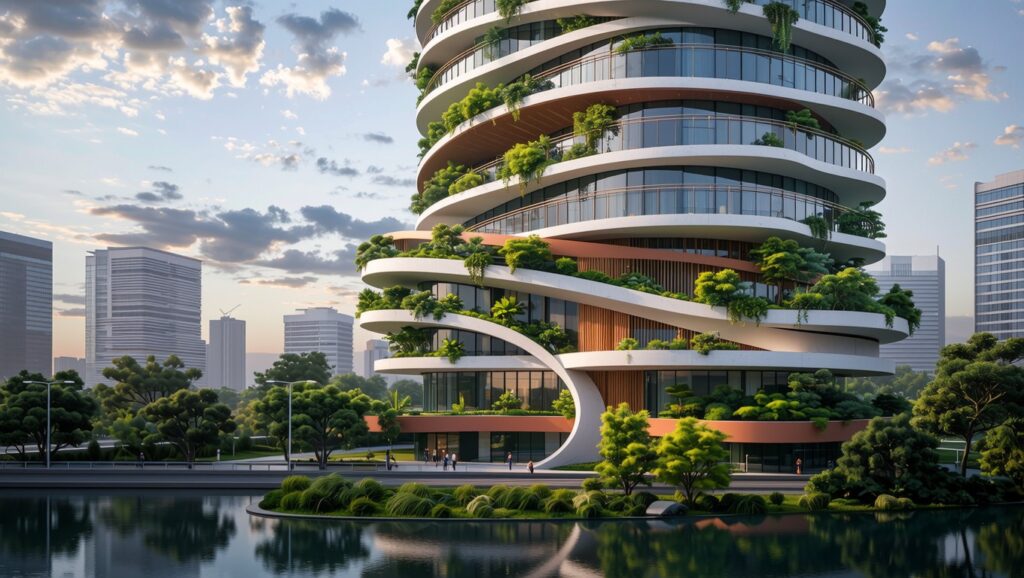
One of the simplest, most cost-effective, and most beautiful adaptations cities can make is to plant more trees and expand green space. Urban greening — green roofs, tree-lined streets, pocket parks, urban forests — cools cities by providing shade and releasing moisture through transpiration. It reduces the urban heat island effect, filters air pollution, absorbs carbon dioxide, supports mental health, and creates biodiversity corridors through urban environments.
In Burkina Faso, Kenya, and India, architects are designing climate-smart schools using passive-cooling techniques: clay walls, cross-ventilation, elevated roofs, and local materials that keep classrooms cool without air conditioning. These schools serve as models for low-cost, low-carbon infrastructure that can be replicated across the developing world. Making transit more resilient is also part of the picture — cities like Buenos Aires are using heat-reflective coatings on buses and planting trees near bus stops to keep riders cool during heatwaves, improving both resilience and ridership.
Innovation on the Horizon
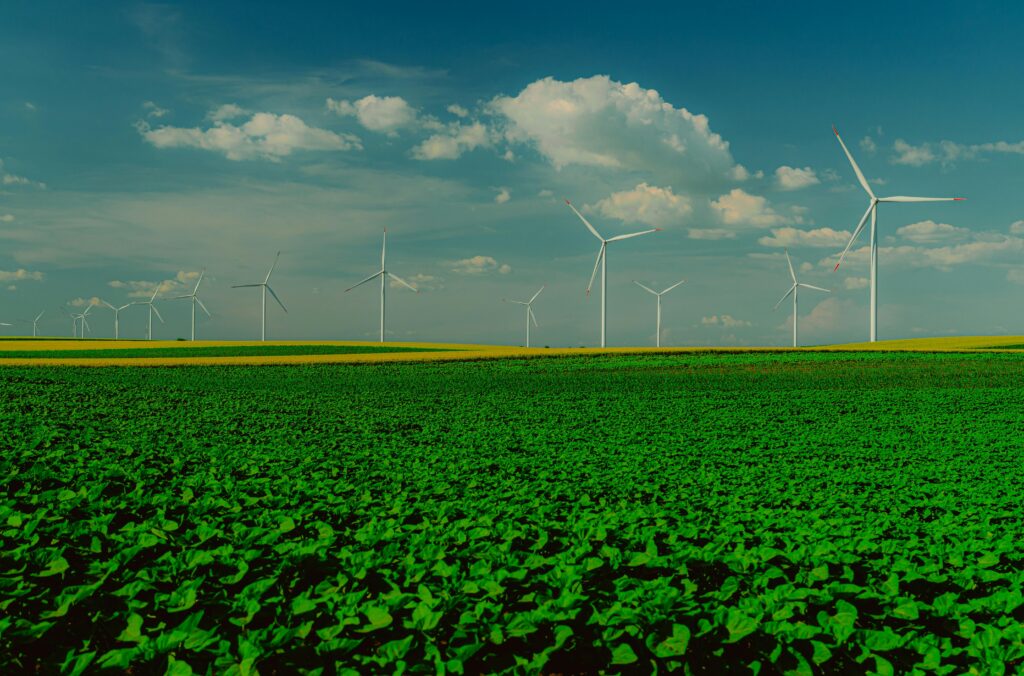
While today’s solutions are already delivering results, the next generation of climate adaptation technologies promises even more transformative possibilities.
Floating Architecture
In the Netherlands, one of the world’s most experienced flood-managing nations, architects are developing entire floating neighborhoods — homes, offices, and public spaces built on water rather than beside it. Rotterdam’s floating pavilion has already proven the concept; designs for floating urban districts are now being considered in flood-vulnerable cities from Lagos to Ho Chi Minh City.
Living Shorelines
Instead of building seawalls that simply deflect wave energy, coastal engineers are designing “living shorelines” — combinations of oyster reefs, salt marshes, submerged aquatic vegetation, and carefully placed structures that absorb wave energy while supporting marine ecosystems. These systems are not only more effective than hard infrastructure in many conditions, but they also improve water quality, support fisheries, and provide critical habitat.
Climate-Resilient Agriculture in Cities
Urban farming and vertical agriculture are moving from curiosity to necessity in climate-stressed cities. Rooftop farms, hydroponic growing systems, and community food gardens are providing local food security in cities where supply chains are increasingly disrupted by extreme weather. Some cities are integrating urban agriculture directly into their adaptation strategies, recognizing that food security and flood resilience can be addressed simultaneously through green infrastructure.
Parametric Insurance for Vulnerable Communities
One of the most innovative solutions for communities too poor to build expensive infrastructure is climate-risk microinsurance. Nicaragua introduced a pioneering climate-risk microinsurance program in 2021 to support farmers and small-business owners against extreme weather. Guatemala’s Catastrophic Parametric Insurance program fully funds insurance for family farmers, who are paid automatically when a weather trigger event occurs. These models are spreading across Latin America, Africa, and Asia — providing financial resilience to communities that have always been most vulnerable to climate shocks.
AI-Driven Urban Planning
The next generation of city planning will be deeply integrated with artificial intelligence. Machine learning algorithms can analyze decades of weather, infrastructure, and demographic data to predict which urban areas are most vulnerable, what interventions will deliver the greatest resilience per dollar invested, and how climate risk will evolve over coming decades. This allows cities to make strategic long-term investments rather than emergency short-term repairs.
The Human Stories Behind the Solutions
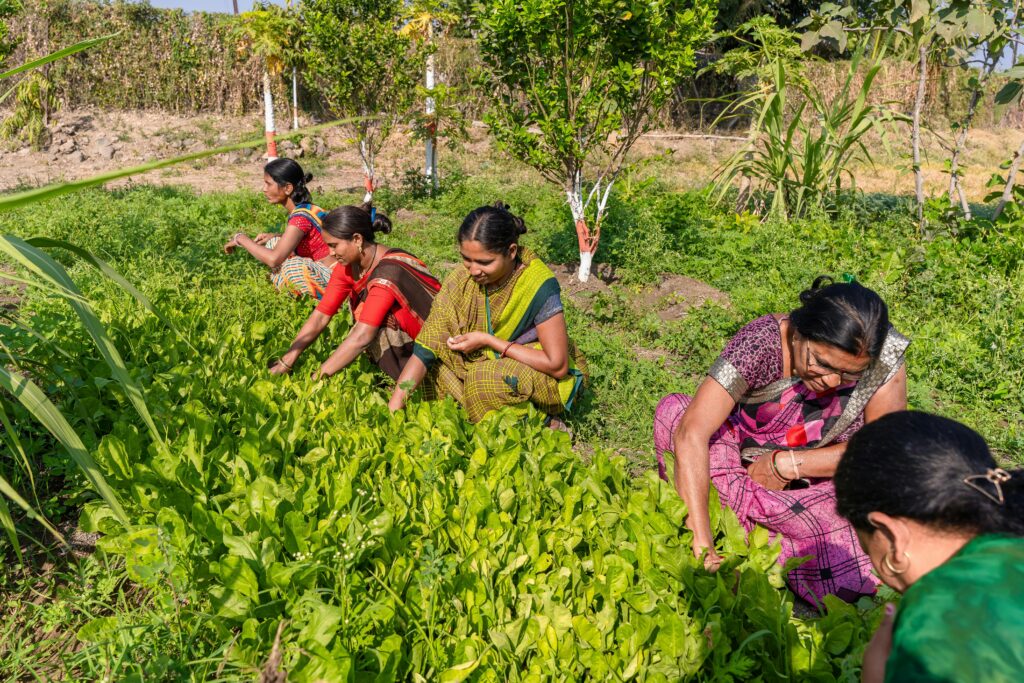
Statistics can describe the scale of the crisis. But it is the human stories that reveal what adaptation really means.
In Copenhagen, a neighborhood called Skt. Annæ Plads was completely redesigned after the 2011 floods. What was once a conventional urban street is now a sloped, terraced public space with planted rain gardens and integrated channels that redirect floodwater during storms. Residents who fought the changes initially now celebrate the transformation — a flood-control system that is simultaneously the most popular park in the neighborhood.
In Indonesia, women on the island of Sulawesi did not wait for government programs. Seeing their shoreline erode and their fishing grounds disappear under rising seas, they organized community mangrove planting efforts that have now protected hundreds of meters of coastline. These women are climate adaptation heroes who have never appeared in a major newspaper.
In Ethiopia, farmers facing increasingly erratic rainfall driven by La Niña patterns are switching to heat-tolerant wheat varieties developed by agricultural scientists and distributed through government programs. Their farms are surviving conditions that would have caused complete crop failure a decade ago.
In Bangladesh, factory owners in the garment industry — under pressure from international brands demanding resilience — are retrofitting their buildings with ventilation systems and insulated roofing that reduces heat stress for workers, increasing productivity while protecting lives.
These stories share a common thread: ordinary people, given the right tools, knowledge, and sometimes financial support, can adapt to extraordinary challenges with remarkable creativity.
The Hope — What 2026 Tells Us
In January 2026, the World Economic Forum’s Global Risks Report identified extreme weather as one of the most pressing near-term threats facing humanity. This is a familiar finding. What is less often reported is the extraordinary momentum building behind solutions.
The global adaptation movement is accelerating. City networks like C40 Cities are connecting mayors worldwide to share proven solutions across borders. The loss and damage fund established at COP28 is beginning to channel finance to the most vulnerable nations. Private investment in climate resilience technology is growing rapidly, with insurers, banks, and real estate companies recognizing that adaptation is not a cost but a necessity for long-term economic stability.
Perhaps most importantly, the solutions are working. Copenhagen has not experienced a catastrophic flood since it redesigned itself. Manila’s mangrove restoration programs are measurably reducing typhoon damage. Philadelphia’s green infrastructure is cleaning waterways and managing stormwater at a fraction of the cost of conventional engineering.
The challenge is not primarily technological anymore. The innovations exist. The evidence is in. The question is one of political will, financial commitment, and the speed at which proven solutions can be scaled globally. Every year of delay makes adaptation more expensive and more difficult. Every year of action saves lives, money, and the social fabric of communities under pressure.
Conclusion: Cities That Bend Will Not Break
The story of extreme weather and climate adaptation cities is ultimately not a story of victimhood. It is a story of ingenuity. It is the story of engineers who looked at a flood and saw a park. Of women who looked at a disappearing shoreline and planted a forest. Of mayors who looked at a billion-dollar disaster and decided to build a city that would never suffer it again.
The cities of the future will not be the cities that built the highest walls against the rising seas. They will be the cities that learned to live with water, with heat, with uncertainty — bending like reeds in the storm rather than snapping like concrete. They will be greener, cooler, more porous, more connected to the natural systems that sustain human life.
The storm is already here. But so, increasingly, is the response.
This article is part of the World Challenges series, exploring the most pressing global challenges of our time and the solutions being built to meet them. For more stories on climate adaptation, extreme weather resilience, and the innovators changing our world, follow Future Fix News.
Sources & Further Reading:
- World Economic Forum Global Risks Report 2026
- International Rescue Committee Emergency Watchlist 2026
- Reuters/Context News: Five Climate Adaptation Ideas to Watch in 2026
- Council on Foreign Relations Education: How the World Can Adapt to Climate Impacts
- Springer Nature: Urban Resilience to Weather and Climate Extremes (2025)
- World Resources Institute: Strategies for Climate Mitigation and Adaptation
- CIWEM: Urban Futures, Sponge Cities and Infrastructure Resilience
- Climate Central: Extreme Weather and Transportation 2026

One thought on “When Cities Fight Back: The New Era of Extreme Weather Design”