

🧠 World Challenge · Mental Health
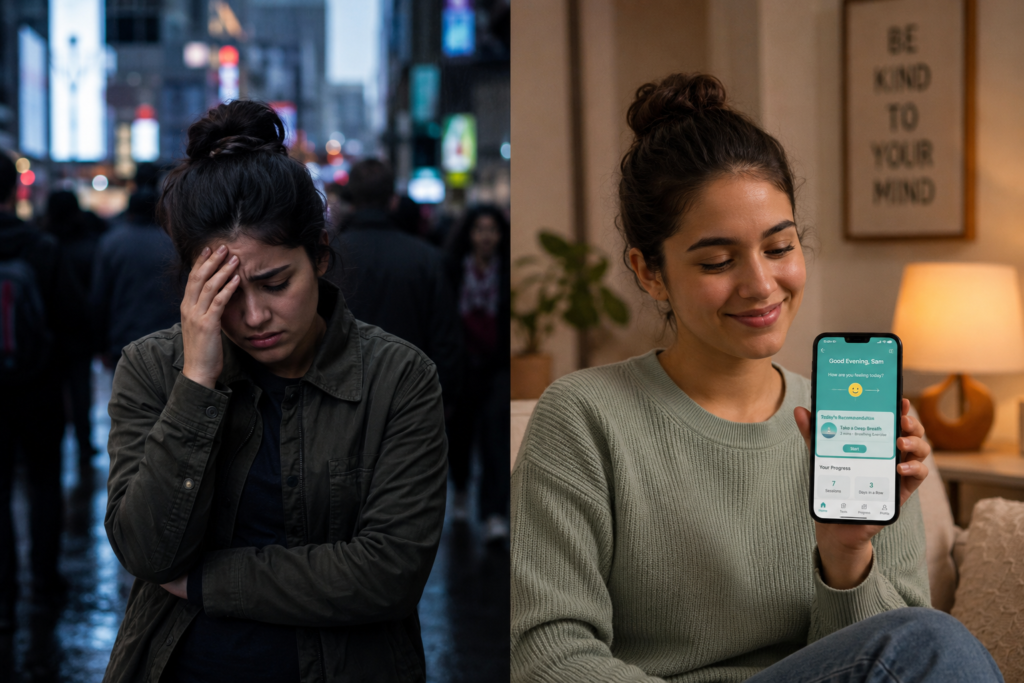
More than one billion people live with a mental health disorder today — yet fewer than 1 in 10 receive the care they need. From digital therapy apps and AI chatbots to child malnutrition’s hidden psychological wounds, this is the full story of humanity’s most invisible crisis — and the bold solutions rising to meet it.
1 Billion+People living with a mental health disorder worldwide (WHO, 2025)
91% People with depression who cannot access care globally (WHO, 2025)
$1 Trillion Lost in global productivity annually due to depression & anxiety
$45.1B Mental health apps market projected by 2035
The Challenge: A World Silently Suffering
The Scale of the Crisis
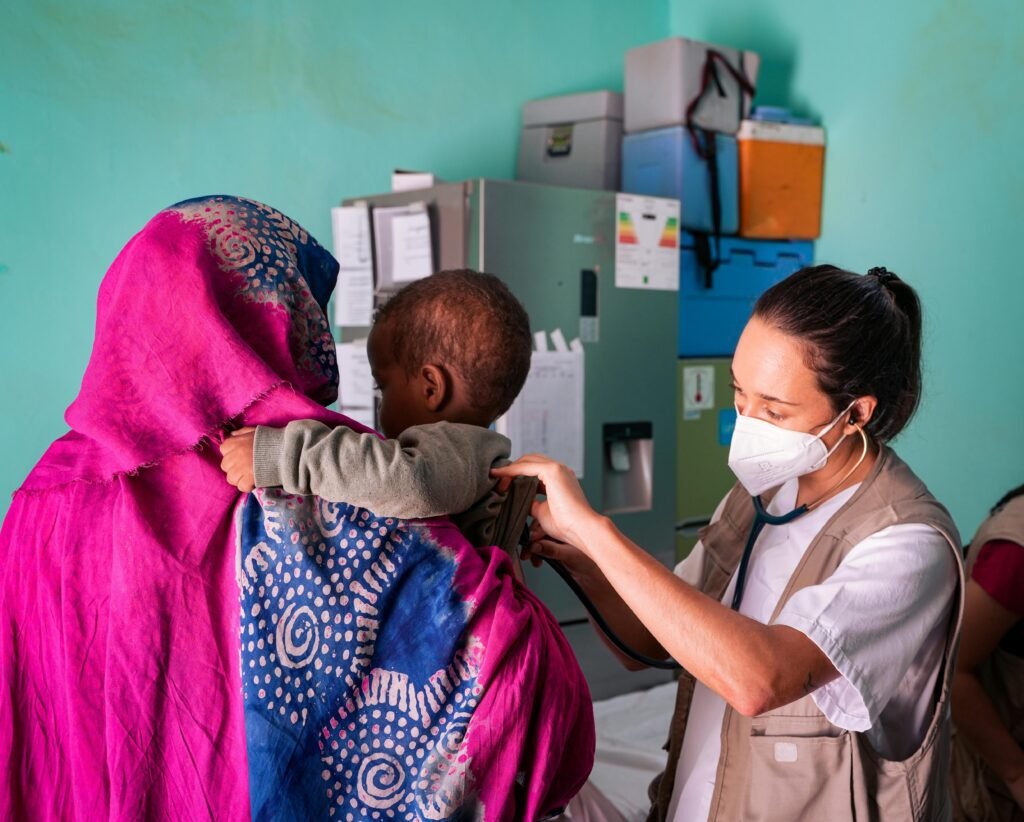
We live in an era of extraordinary technological achievement. Humans have sequenced the genome, connected billions through the internet, and sent rovers to Mars. Yet one of the most fundamental aspects of human existence — the mind — remains, for most of the world’s population, beyond the reach of care and compassion. The global mental health crisis is not merely a health statistic. It is a civilisational challenge, woven into the fabric of daily life across every continent, every culture, every income bracket.
According to the World Health Organization’s landmark 2025 report, more than one billion people — roughly one in every seven humans alive today — are living with a mental health disorder. Depression and anxiety remain the most prevalent, but the umbrella is vast: post-traumatic stress disorder, bipolar disorder, schizophrenia, eating disorders, addiction, and more. The actual burden is almost certainly higher, given that most low- and middle-income countries conduct little population-level mental health screening.
Most alarming is the treatment gap. A 2025 study published in JAMA Psychiatry found that only 6.9% of people with mental health or substance use disorders receive the treatment they need. In the world’s wealthiest nations, the figure hovers above 50% — still inadequate, but far better than low-income countries where fewer than 1 in 10 receive any care whatsoever. The chasm between need and provision is one of the most grotesque inequalities in modern medicine.
“The global state of mental health has been described by the WHO as ‘a silent crisis hidden in plain sight’ — yet the scale of suffering is anything but invisible to those living it.”
World Health Organization, World Mental Health Report, 2025
The Economic Devastation
The WHO estimates that depression and anxiety alone cost the global economy USD $1 trillion in lost productivity and 12 billion lost working days every single year. In the United States, mental health conditions are the fifth leading cause of disability. A 2025 Deloitte survey found that only 52% of Generation Z workers — those aged roughly 18 to 28 — rate their mental wellbeing as good or very good. This youngest generation of the global workforce is entering careers already exhausted, anxious, and without adequate support.
The Youth Mental Health Emergency
Nowhere is the crisis more acute than among young people. According to UNICEF’s 2025 data, four in ten Gen Z adults globally report feeling anxious or stressed most or all of the time. A staggering 54% of Gen Z say stress has reached levels that prevented them from working at least once in the past year. Suicide remains the leading cause of death among individuals aged 15 to 29 globally. Around 20% of the world’s children and adolescents are estimated to have a diagnosable mental health condition — and yet child and adolescent mental health services remain among the most underfunded sectors in global public health.
The Hidden Crisis Within a Crisis: Child Malnutrition and Mental Health
One of the most under-reported dimensions of the global mental health crisis is its intersection with child malnutrition — a connection that science is now urgently exploring. Childhood malnutrition is not simply a physical tragedy. Research published in the BMJ Global Health journal has confirmed that severe malnutrition in early childhood is strongly associated with impaired neurodevelopment, diminished academic achievement, cognitive delays, and significant behavioural problems that can persist through adolescence and into adulthood.
Médecins Sans Frontières (MSF), working across northern Nigeria in 2025, documented how children admitted to inpatient therapeutic feeding centres frequently presented with profound psychological symptoms. These children became irritable, withdrawn, and emotionally unresponsive. Many missed critical developmental milestones — struggling to walk, to talk, to interact with the world around them. MSF psychological teams noted that the emotional detachment these children experienced was not simply sadness. It was the psychological wound of pain, loss, and a body too malnourished to properly build the brain.
The relationship runs deeper still. A 2025 study published in BMJ Open found that poor maternal mental health — particularly depression and anxiety in mothers — is directly associated with higher rates of child stunting in countries like Rwanda. When a mother’s mental health collapses, her capacity to provide consistent nutrition, stimulation, and emotional bonding with her child collapses with it. Mental health and malnutrition create a vicious, intergenerational cycle, each feeding the other.
The Solutions: Building a World That Heals
Digital Therapy Apps — Democratising Mental Healthcare

Perhaps no single development has done more to reshape mental health access in the past five years than the explosion of digital therapy applications. The mental health apps market was valued at USD $9.61 billion in 2025, and is projected to reach USD $45.12 billion by 2035 — a growth rate of 16.73% annually. This is not merely a commercial phenomenon. It is a response to a structural failure: there are simply not enough trained mental health professionals to meet global demand, and there never will be in the traditional model.
Apps such as Headspace, Calm, BetterHelp, Talkspace, Woebot, and Wysa have collectively reached tens of millions of users. They offer Cognitive Behavioural Therapy (CBT) modules, mindfulness sessions, mood tracking, crisis support lines, and — increasingly — AI-powered conversational support. In the UK, the NHS has partnered with the “Everyday Mental Health” app and launched an AI chatbot to simplify referrals and offer early digital support for patients awaiting clinical care. This is a profound structural shift: technology is now formally integrated into national healthcare mental health pathways.
In February 2025, data showed that 62.3% of patients with a telehealth mental health claim had sought support through virtual platforms — marking a tipping point in how humanity accesses psychological care. Telehealth tools have particularly transformed access in rural and low-connectivity regions, removing the physical, logistical, and stigma-related barriers that previously kept millions from ever walking through a therapist’s door.
Workplace Mental Health Programs — The Corporate Awakening

Corporations are no longer able to ignore what their employees are experiencing. The evidence is too costly, too visible, and too urgent. According to a 2025 SHRM report, 31% of US workers identify the workplace itself as a primary source of their stress. Progressive organisations worldwide are responding by building dedicated mental health infrastructure — not as a perk, but as a structural business necessity. Leading employers are now offering Employee Assistance Programs (EAPs) that provide confidential counselling, flexible working arrangements, and on-demand mental health support through apps integrated into company benefit platforms. Microsoft, Google, and Salesforce have each expanded their internal mental health programmes to include unlimited therapy sessions, peer support networks, and mental health days. In Asia, where workplace culture historically stigmatised vulnerability, companies in Japan, South Korea, and Singapore are beginning to appoint Chief Wellbeing Officers and build dedicated mental health rooms in office buildings.
Simplified Malnutrition Treatments — Healing the Body and the Mind Together

One of the most promising convergences in global health is the development of simplified, community-based treatment protocols for childhood malnutrition that now explicitly integrate mental health components. The International Rescue Committee (IRC) has committed to providing one million children with access to malnutrition treatment and has developed simplified combined protocols for treating severe and moderate acute malnutrition together in one programme — delivered through community health workers rather than requiring hospital admission.
MSF’s inpatient therapeutic feeding centres now incorporate dedicated psycho-stimulation sessions alongside nutritional treatment: structured play with colours, sounds, and gentle massage that help children regain lost developmental skills and rebuild emotional bonds with their caregivers. This recognition — that feeding a malnourished child without addressing their psychological wounds leaves the job only half done — is a paradigm shift in global health delivery.
Innovation: The Technology Rebuilding the Mind
Artificial Intelligence in Mental Healthcare

The most transformative force reshaping mental health is artificial intelligence. The global AI in Mental Health Market — valued at USD $0.92 billion in 2023 — is projected to reach USD $14.89 billion by 2033, growing at a compound annual growth rate of 32.1%. This extraordinary expansion reflects a fundamental reimagining of how mental health support can be delivered at global scale. AI systems are now capable of detecting subtle changes in communication patterns — the pace of speech, the selection of words, micro-variations in emotional tone — that may signal the early development of depression, anxiety, or psychosis long before a human clinician might notice. This capability for early-warning detection could be transformative in low-income regions where the ratio of psychiatrists to population can be as catastrophic as one doctor per two million people.
AI Chatbot Therapy
Woebot, Wysa and similar platforms use evidence-based CBT delivered by AI 24/7. Users in 135+ countries. No waitlists, no stigma barrier, no cost in basic versions.
VR Exposure Therapy
Virtual reality platforms let patients safely confront phobias and PTSD triggers in immersive environments — with measurable clinical outcomes comparable to in-person therapy.
Digital Phenotyping
Smartphone sensors passively monitor sleep, movement, social interaction, and typing speed to build real-time mental health profiles — flagging crises before they happen.
Peer Support Networks
Platforms like 7 Cups connect millions to trained peer listeners globally — bridging the gap between informal social support and formal clinical care.
Community Support Systems — The Human Infrastructure
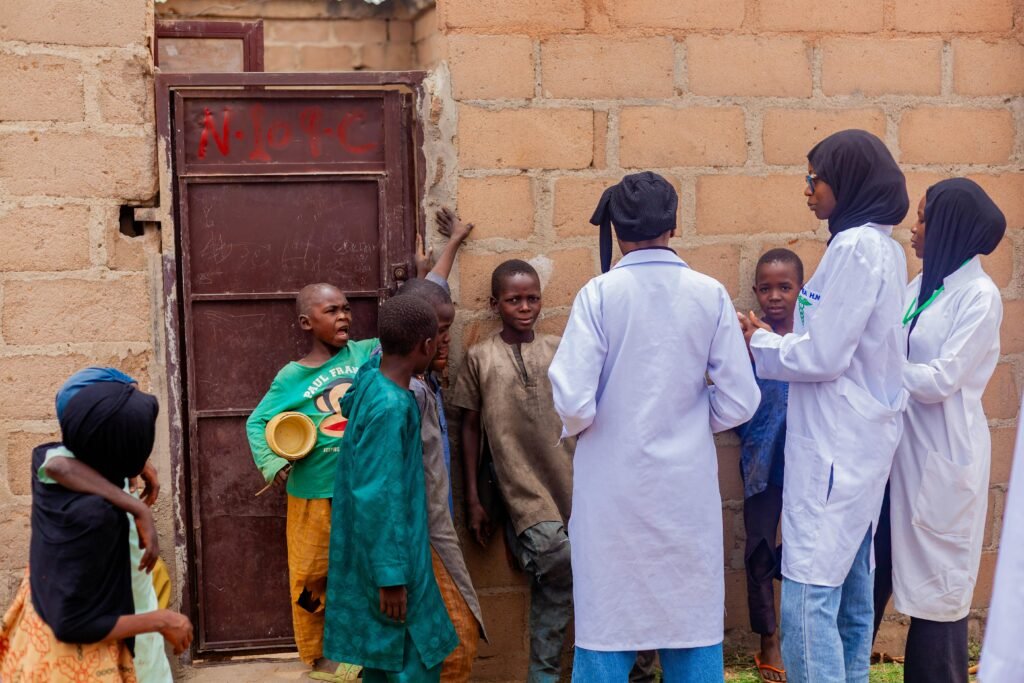
Technology alone cannot solve the mental health crisis. The most resilient solutions combine digital tools with deeply human, community-based systems. In sub-Saharan Africa, models like Uganda’s Village Health Teams and Kenya’s community health volunteer networks are being trained in basic psychological first aid — enabling millions of people to receive basic mental health support from trusted members of their own communities.
In Sri Lanka — a country with a rich tradition of community wellbeing — temple-based counselling programmes, combined with government telehealth initiatives, have begun to demonstrate that culturally sensitive, community-embedded mental health support can reach populations that formal psychiatric services never could. The model is being watched closely by global health planners as a blueprint for other middle-income countries. The 988 Suicide and Crisis Lifeline in the United States — launched in 2022 — received over 10 million contacts in its first two years of operation, demonstrating the extraordinary pent-up demand for accessible crisis support. This single phone number, simple and memorable, has become one of the most effective public health interventions in the country’s recent history.
Human Stories: The Faces Behind the Numbers
Voices from the Crisis — and the Recovery
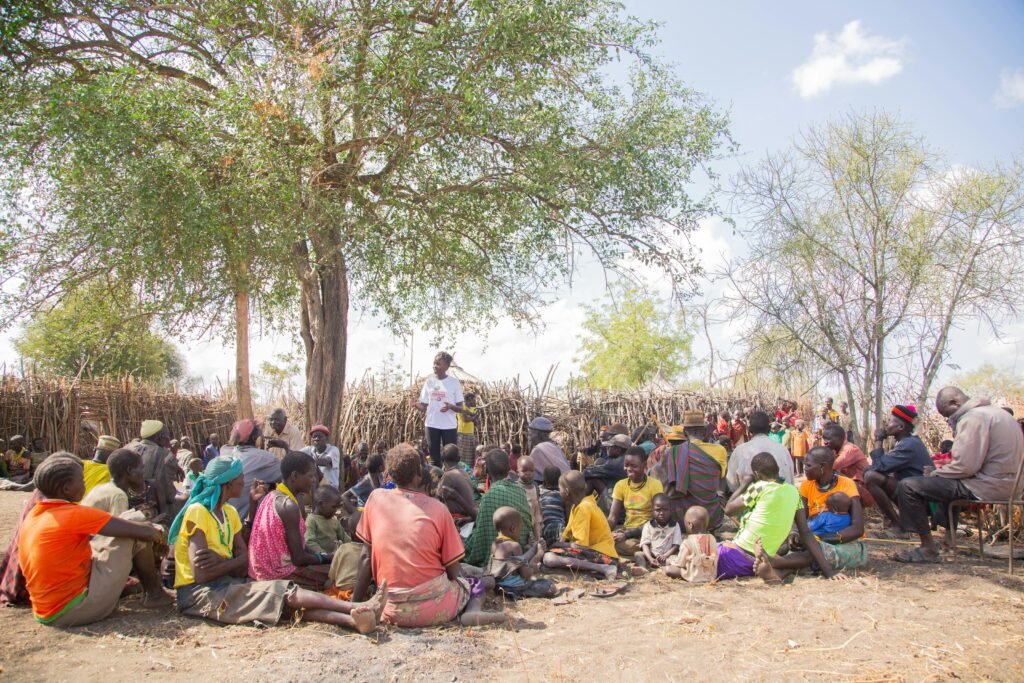
Statistics can convey scale, but they cannot convey suffering. Behind every percentage point in the global mental health data sits a human life — a teenager who cannot leave their bedroom, a mother who cannot bond with her child, a war survivor who wakes screaming at 3am, a corporate executive who collapses at their desk in a country where no one asks if you are truly okay. These stories matter because they are the reason this work matters.
Amara, 27 — Lagos, Nigeria

West Africa · Urban Mental Health & Workplace Burnout
Amara is a software engineer who experienced a severe anxiety breakdown during the height of a product launch in 2024. “In Nigeria, you don’t say you’re struggling. You say you’re fine, because anything else is weakness,” she says. With no access to a local therapist she could afford, Amara turned to an AI-powered therapy app recommended by a colleague in London. Within eight weeks of daily check-ins and CBT exercises, she says she had rebuilt enough stability to return to work. “The app gave me language for what I was feeling. That alone was revolutionary.”
Murjanatu, 14 months — Bauchi State, Nigeria
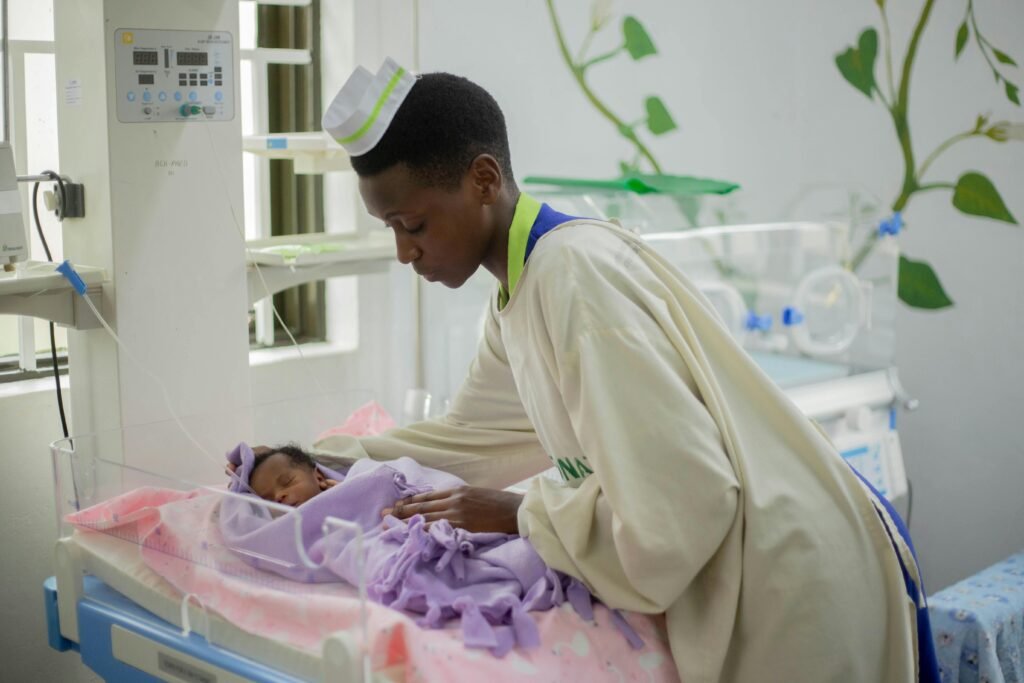
Northern Nigeria · Child Malnutrition & Psycho-Stimulation Recovery
Murjanatu arrived at an MSF therapeutic feeding centre unable to sit upright, her small body depleted by severe acute malnutrition. Her mother, Aisha, sat frozen — her own anxiety and grief having tipped into what clinicians would later identify as maternal depression. Over six weeks, while Murjanatu received Ready-to-Use Therapeutic Food (RUTF), MSF counsellors worked with Aisha on bonding exercises, and Murjanatu participated in daily psycho-stimulation sessions — colours, sounds, gentle touch. By the day of discharge, Murjanatu reached for a toy. Aisha cried. Both were, in their own way, healing.
Kenji, 42 — Tokyo, Japan

East Asia · Workplace Mental Health Program
Kenji, a middle manager at a major electronics firm, had never used the word “depression” in his life. In Japan, workplace loyalty is identity. Mental illness is shame. After his company became one of the first in the sector to mandate mental health training for all managers and introduce an anonymous digital wellbeing platform, Kenji quietly began using the app during his commute. “It asked me questions no one had ever asked me,” he recalls. Within a year, Kenji became a mental health first-aider for his team — and the initiative spread to 14 other departments.
Maria, 34 — São Paulo, Brazil

Latin America · Community Support Systems
After losing her job during the economic contraction of 2024, Maria spiralled into what she describes as “a darkness without a name.” She had no money for therapy and feared the stigma of community services. A neighbour mentioned a church-affiliated peer support group that had quietly partnered with a local NGO to offer structured group sessions based on psychological first aid principles. Today Maria co-facilitates that group. “We are not therapists,” she says. “But we have lived the same road. Sometimes that is exactly what someone needs to hear to keep walking.”
The Hope: A World Beginning to Heal
The Stigma Is Falling

For all the gravity of the crisis, 2026 carries genuine, evidence-based reasons for hope. Perhaps the most consequential shift is cultural: the social stigma that for generations kept mental illness locked behind closed doors is visibly, measurably declining — particularly among younger generations. American Psychological Association data shows that 64% of Gen Z adults report feeling comfortable seeking professional mental health help, compared to just 31% of Baby Boomers. This is not a minor statistical variation. It is a generational revolution in how humanity understands itself.
Celebrity and athlete openness about mental health struggles — from Simone Biles stepping back from the Tokyo Olympics to protect her mind, to Prince Harry’s public advocacy, to tennis champion Naomi Osaka’s stand against forced media appearances — has demonstrably shifted cultural attitudes at a global scale. Google Trends data shows a 380% increase in searches for “therapy” and “therapist near me” over the past decade — an extraordinary indicator of rising willingness to seek help.
Policy, Investment and the Path to Access
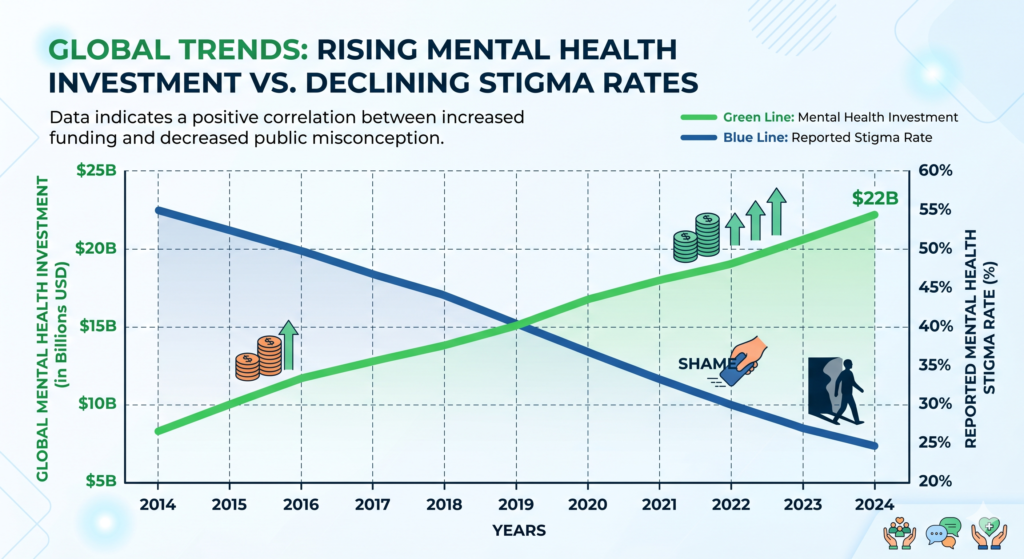
Governments that once allocated less than 2% of their health budgets to mental health are beginning to hear the argument differently — not as a compassionate investment, but as an economic one. The WHO has demonstrated that every USD $1 invested in scaled-up treatment for depression and anxiety returns USD $5 in improved health and productivity. That is a return on investment most development programmes can only dream of. The World Bank, multiple G20 nations, and the Global Fund have each increased commitments to mental health integration in national healthcare systems since 2023.
The Malnutrition Breakthrough — Simpler, Faster, Cheaper
On the malnutrition front, the shift towards simplified, community-based treatment protocols is beginning to demonstrate what many in the field have long argued: that reaching the unreached does not require sophisticated hospital infrastructure. It requires protocols simple enough for community health workers to deliver, therapeutic foods that don’t require refrigeration, and support systems that treat the whole child — including their developing mind. The IRC’s commitment to reaching one million children through simplified approaches represents one of the most ambitious malnutrition treatment pledges in recent history.
Technology Closing the Gap

The convergence of falling smartphone costs, expanding mobile internet access in the Global South, and rapidly improving AI mental health tools creates a genuine pathway — for the first time in history — to close the treatment gap at scale. While telehealth has so far largely replaced rather than added to in-person visits in wealthy countries, in regions where in-person visits were never a realistic option, digital tools represent pure expansion of access. India, Nigeria, Kenya, Bangladesh, and Indonesia — countries with hundreds of millions of underserved mental health needs — are all seeing rapid growth in digital mental health platform adoption.
The hope of 2026 is not naive optimism. It is grounded in data, in technology, in human stories of recovery, and in the slowly but surely growing commitment of governments, corporations, and communities to say, collectively: this matters. Mental health is not a luxury. It is not a weakness. It is the foundation upon which every other human ambition — peace, productivity, creativity, love, justice — is built. And the world is finally beginning to build it properly.
“Stigma around mental health treatment is declining — particularly among younger generations. A world that once said ‘pull yourself together’ is slowly learning to say ‘I’m here with you.'”
Future Fix News Analysis, May 2026
Conclusion: The Crisis That Cannot Wait
The global mental health crisis is not one story — it is a billion stories, unfolding simultaneously across every city, village, office, and family on earth. It is the Gen Z worker crying quietly in a bathroom at lunchtime. It is the malnourished toddler in Nigeria who cannot bond with her mother. It is the Japanese salary-man who has never been asked how he is — truly asked. It is the Brazilian woman who found her first safe space in a church community group.
The solutions are here. Digital therapy is democratising access. AI is building early warning systems that can reach remote communities. Workplace programmes are beginning to shatter the culture of silence. Simplified malnutrition treatment is healing both bodies and minds simultaneously. Community health networks are putting mental health first aid into the hands of trusted locals. And a new generation — more emotionally literate, less ashamed, more willing to ask for help than any generation before them — is leading the charge.
The question now is not whether humanity can fix the mental health crisis. We know it can. The question is how fast we choose to move, how much we choose to invest, and how loudly we are willing to say — to every person still suffering in silence — you are not alone, and help is coming.
Sources & Further Reading
1. World Health Organization — World Mental Health Today Report, 2025. who.int/publications
2. JAMA Psychiatry — “Treatment Gap in Mental Health and Substance Use Disorders,” 2025. jamanetwork.com
3. WHO — “Depression and Anxiety Cost $1 Trillion Per Year in Lost Productivity,” 2025. who.int
4. Growtherapy.com — Mental Health Statistics 2026. growtherapy.com/blog/mental-health-statistics
5. Deloitte Global — 2025 Gen Z and Millennial Survey. deloitte.com/global
6. SNS Insider — Mental Health Apps Market 2025–2035. snsinsider.com
7. JMIR mHealth & uHealth — “Mental Health Apps in the Workplace,” March 2026. mhealth.jmir.org
8. Médecins Sans Frontières — “How Malnutrition Affects Mental Health,” Nigeria 2025. msf.org
9. BMJ Global Health — “Neurodevelopmental Impairments Following Childhood Malnutrition,” 2022. bmjglobal.bmj.com
10. BMJ Open — “Maternal Mental Health and Child Stunting in Rwanda,” 2025. bmjopen.bmj.com
11. Global Nutrition Report — IRC Commitment: 1 Million Children with Malnutrition Treatment. globalnutritionreport.org
12. When Notes Fly — Mental Health Statistics 2026. whennotesfly.com
13. Media.market.us — AI in Mental Health Market Size 2023–2033. media.market.us
14. American Psychological Association — Stigma and Help-Seeking by Generation Survey, 2025. apa.org
15. SAMHSA — National Survey on Drug Use and Health (NSDUH), July 2025. samhsa.gov
xjvfvnzdyrelgzimtkioliyptjkfsr